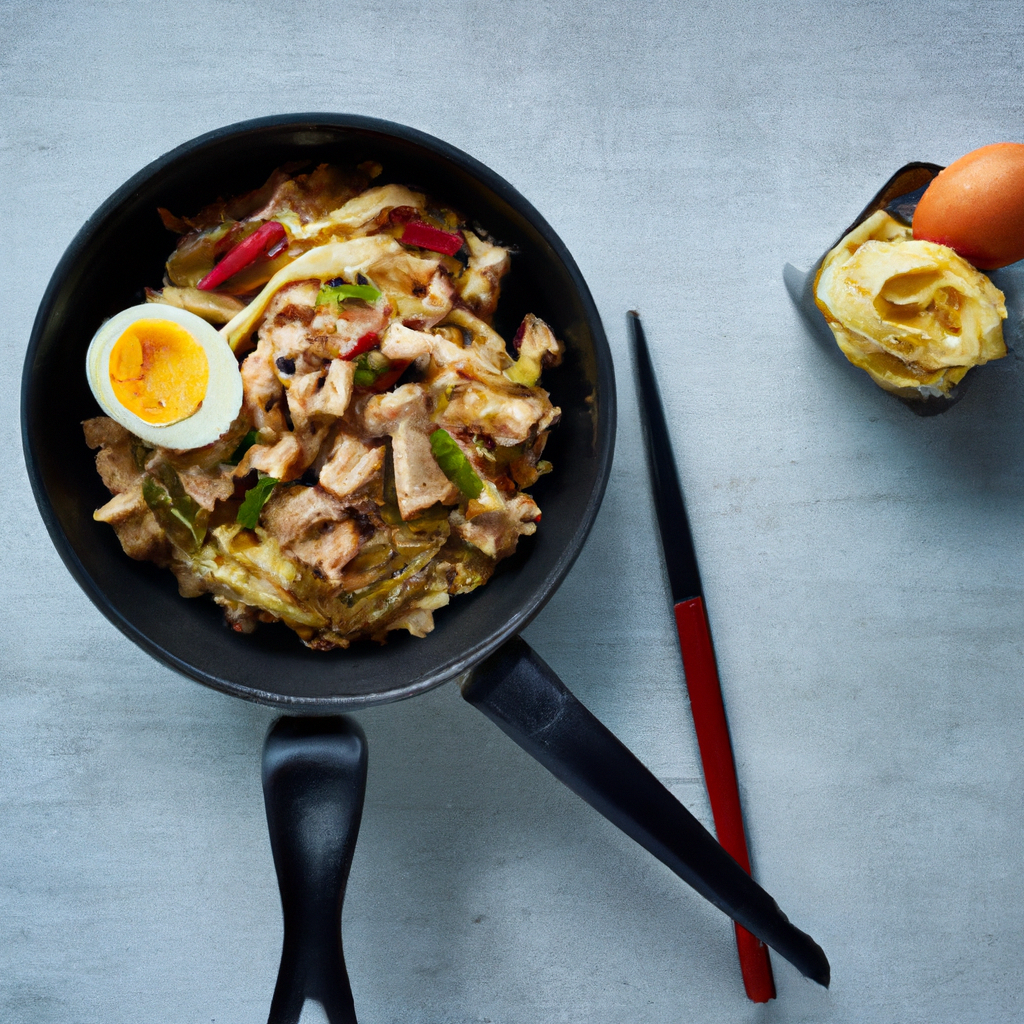
What are Biang Biang Mian?
The noodles come from Xi'an, the capital of Shaanxi province. Biang imitates the sound of the dough slapping on the work surface as it is pulled. The character for it has over 50 strokes and is missing from most dictionaries. The Chinese title of this recipe, 油泼扯面 (Youpo Chemian), translates as pulled noodles doused with hot oil. For the version with cut instead of pulled noodles, see Shaanxi You Po Mian.
Biang Biang Mian have little in common with Japanese ramen. Many people trace the word ramen back to the Chinese lamian, pulled noodles that cooks in Lanzhou stretch into thin round strands. Japanese ramen noodles are cut from rolled-out dough. For round pulled noodles, see the recipe Lanzhou Lamian.
The right ingredients
- Flour: Bread flour or strong flour has a little more protein than all-purpose flour and makes a stretchy dough. All-purpose flour works too, but the ribbons tear more easily.
- Black vinegar: Chinkiang vinegar from an Asian grocery store tastes mild, malty and slightly sweet. If you can't find it, look for substitutes under substituting Asian ingredients.
- Chili: Chinese chili flakes are coarse, red and aromatic, but less hot than cayenne. Korean gochugaru is a good substitute.
How to pull the noodles
Kneading and resting
Knead the dough for 8 to 10 minutes until smooth. At first it feels stiff and cracked, but after resting it stretches easily. The gluten relaxes during that hour, and the dough doesn't tear when you pull it.
Oiling
Divide the dough into 6 pieces of about 75 g each, roll each into a short log and press it into a flat rectangle of about 15 × 5 cm. Brush all sides of each piece with oil and cover them. If you have time, let them rest another 30 minutes. The oil keeps the pieces from sticking together or drying out.
Pulling and tearing
Press a groove lengthwise down the middle of the rectangle with a chopstick. Take both ends, pull the ribbon apart and slap it on the work surface several times as you go, until it is about 80 cm long and as thin as a lasagna sheet. Then tear it open along the groove to get a long loop. Put the noodles into the boiling water right away, or they stick together.
The original: doused with hot oil
In the recipe above you toss the noodles in a pan. Cooks in Xi'an put the cooked noodles in a bowl, pile garlic, chili flakes, scallions and Sichuan pepper on top and pour 3 to 4 tbsp of smoking hot oil over them. The spices sizzle and toast in the oil. Then vinegar and soy sauce go in, and you mix everything at the table. Blanched bok choy or bean sprouts often sit under the noodles.
Common mistakes
- Rested too briefly: The dough springs back and tears when you pull it.
- Ribbons too thick: The outside turns soft while the inside stays raw and doughy.
- Oil too cool: The garlic doesn't sizzle, so it stays raw and sharp.
Variations
The recipe on the card uses no animal products, so it is vegan. In Xi'an you can also get the noodles with tomato and egg sauce or with braised pork. If you like it hotter and with ground meat, try Dan Dan Mian from Sichuan. The recipe Daoxiao Mian shows hand-cut noodles from the neighboring province of Shanxi.