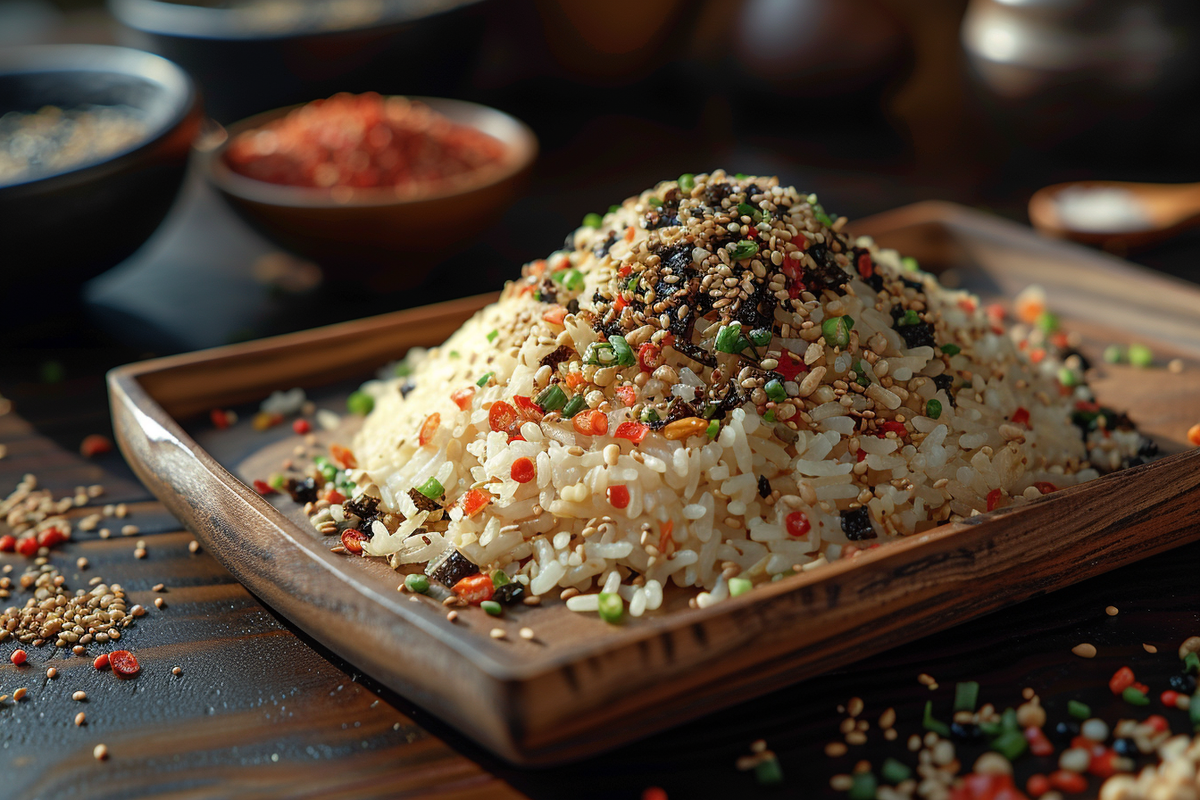
What is furikake?
Furikake (ふりかけ) translates roughly as "for sprinkling over". In Japan you sprinkle the mix on a bowl of plain white rice, on onigiri or over the rice in a bento box. The classic version contains toasted nori pieces, sesame, salt, a little sugar and bonito flakes. The article on furikake explains its origin, types and where to buy it. For the recipe card below, count on 3 to 4 tbsp of furikake for 400 g of uncooked rice.
The right rice
Use Japanese short-grain rice, often sold as sushi rice. The grains stick together slightly, and the seasoning clings to their surface. With basmati or jasmine rice the grains fall apart, and the furikake sifts to the bottom of the bowl. Rinse the rice until the water runs almost clear, and cook it with 500 ml of water for 400 g of rice. For pot rice without a scorched bottom, see how to cook rice.
How to get furikake rice right
Let the rice steam off
After the resting time, fluff the rice with a rice paddle and leave it uncovered for 2 to 3 minutes. The surface dries off in that time. If you sprinkle furikake on wet rice, the nori and sesame soak up moisture and clump.
Season just before eating
Fold in the mix only when you serve, or sprinkle it on top and let everyone mix at the table. Nori draws moisture and turns soft after 10 to 15 minutes. For onigiri and bento, you still mix the furikake in beforehand, since flavor matters more than crunch there.
Adjust the amount to taste
Start with 2 tbsp and taste. Store-bought mixes contain different amounts of salt and sugar depending on the brand. With homemade furikake you can be more generous.
Making your own furikake
For a small jar, toast 3 tbsp of sesame in a dry pan until fragrant and popping. Pass 2 nori sheets briefly over the hot pan until they crackle, then crumble them. Mix both with 2 tbsp of bonito flakes, 1 tsp of salt and 1 tsp of sugar. In a screw-top jar the mix keeps for 2 to 3 weeks. For a vegetarian version, leave out the fish and use a third nori sheet and a little crumbled, toasted kombu. Store-bought furikake often contains fish, so read the ingredient list.
Common mistakes
- Too much water: Soft, wet rice absorbs the mix and turns mushy.
- Seasoned too early: After half an hour in the pot, the nori tastes like wet paper.
- Too much furikake: The bowl turns salty, and the taste of the rice disappears.
Variations and what to serve with it
Put a pat of butter and a few drops of soy sauce into the hot rice, then sprinkle the furikake over it. With egg furikake (tamago) the rice tastes milder, with yukari made from red shiso leaves it turns tangy. For rice balls, shape the seasoned rice as in the onigiri with tuna and furikake. For a simple Japanese meal, serve the rice with miso soup with shiitake and tofu and grilled mackerel following the recipe for Shioyaki Saba.