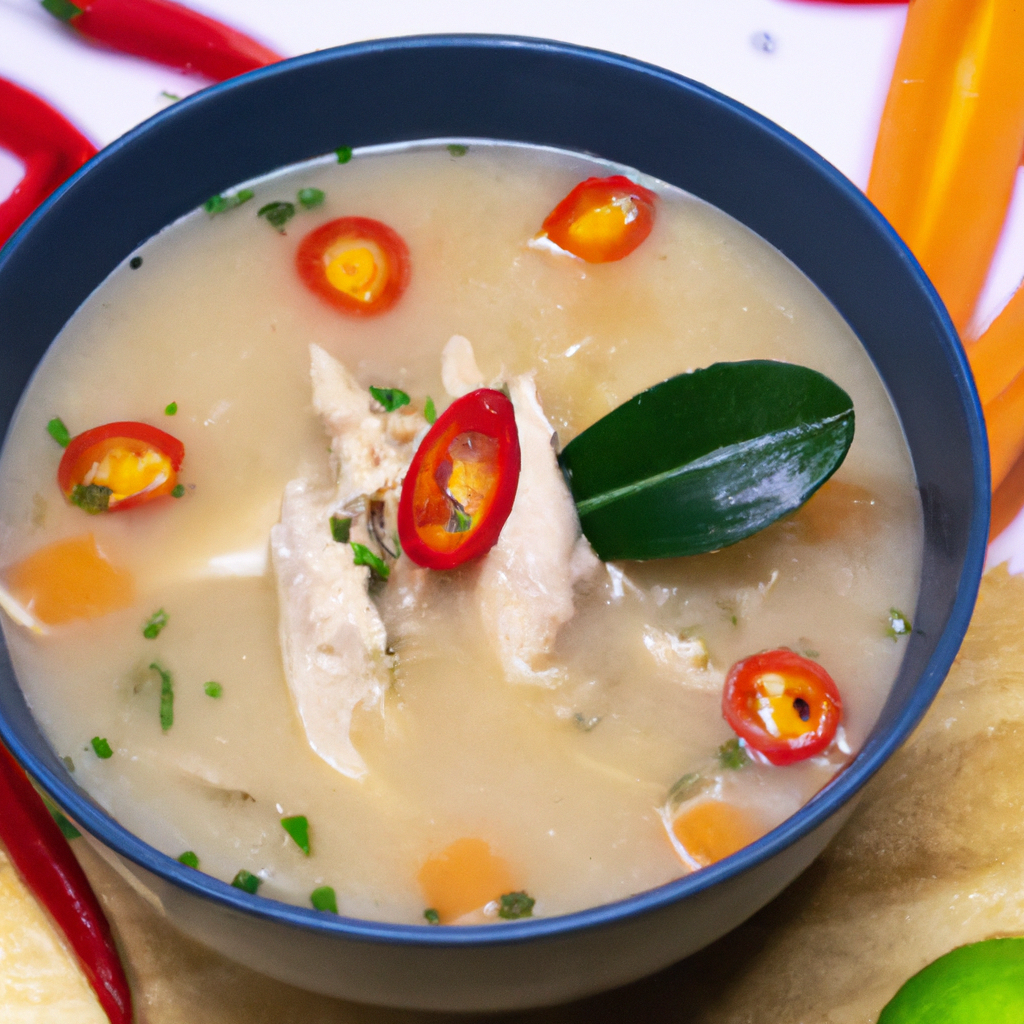
What does Tom Yum mean?
"Tom" means to boil, "Yum" refers in Thailand to a hot and sour mixed salad, and "Gai" is chicken. On menus you also see it spelled Tom Yam or Tom Yam Gai. It is the same soup. The best-known version is the one with shrimp, Tom Yum Goong. Thai cooks also tell apart two styles: Tom Yum Nam Sai with a clear broth, and Tom Yum Nam Khon, which they make creamy with unsweetened evaporated milk or coconut milk. This recipe is the clear version. With plenty of coconut milk and galangal as the main flavor, you end up at Tom Kha Gai.
The right ingredients
- Lemongrass: Use the lower, pale third of the stalks. Cut it on the diagonal into pieces and bruise it with the back of a knife so the aroma gets into the broth. Buying and storage are explained on the page about lemongrass.
- Galangal: The root looks like ginger and tastes resinous and peppery. Ginger is a poor substitute. At an Asian grocery store you can find galangal fresh or frozen in slices.
- Makrut lime leaves: Tear the leaves or cut out the center rib. Frozen leaves smell almost like fresh ones, while dried ones give off little.
- Fish sauce: It supplies the salt in the soup. You do not need extra salt.
- Mushrooms: In Thailand, straw mushrooms or oyster mushrooms go in the pot. Button mushrooms, as in the recipe card, are the usual substitute elsewhere.
How to make Tom Yum Gai
Let the aromatics steep in the broth for at least 10 minutes before adding the chicken. Breast cooks in gently simmering soup in 8 to 10 minutes. At a rolling boil it turns dry and stringy. Boneless chicken thighs stay juicier and can take a few minutes longer.
Take the pot off the heat before you stir in the lime juice. If you boil it, it tastes bitter and loses its freshness. Then adjust in small steps: first fish sauce for salt, then lime for sourness, and finally sugar if the soup tastes too sharp. The recipe card lists 2 tbsp lime juice. If you like the soup more sour, use 3 to 4 tbsp.
For a reddish broth with more depth, stir in 1 tbsp nam prik pao. The roasted chili paste contains tamarind, palm sugar and dried shrimp and gives the soup a sweet, smoky note.
Common mistakes
- Herbs cut too small: You do not eat the lemongrass, galangal and lime leaves. In large pieces they are easy to find and set aside on the rim of the bowl.
- Chili in the pot too early: Crushed chilies give off their heat within a few minutes. Add them only at the end, as in the recipe card, and you control the heat yourself.
- Too much sugar: Tom Yum tastes sour and hot, and the sweetness stays in the background. 1 tsp is enough for 1 liter of broth.
- Boiling the leftovers: Warm leftover soup without bringing it to a boil, and add fresh lime juice.
Variations
For Tom Yum with shrimp, replace the chicken with 400 g raw shrimp and let them cook for only 2 to 3 minutes. For a vegetarian soup, use vegetable broth, firm tofu and more mushrooms, and season with light soy sauce instead of fish sauce. You can find a pure mushroom soup with the same aromatics at Tom Yum Hed.
What to serve with it
In Thailand, Tom Yum is one of several dishes on the table, and everyone eats rice with it. For that, cook jasmine rice. A mild yellow curry or stir-fried vegetables from the wok go well as a second dish.