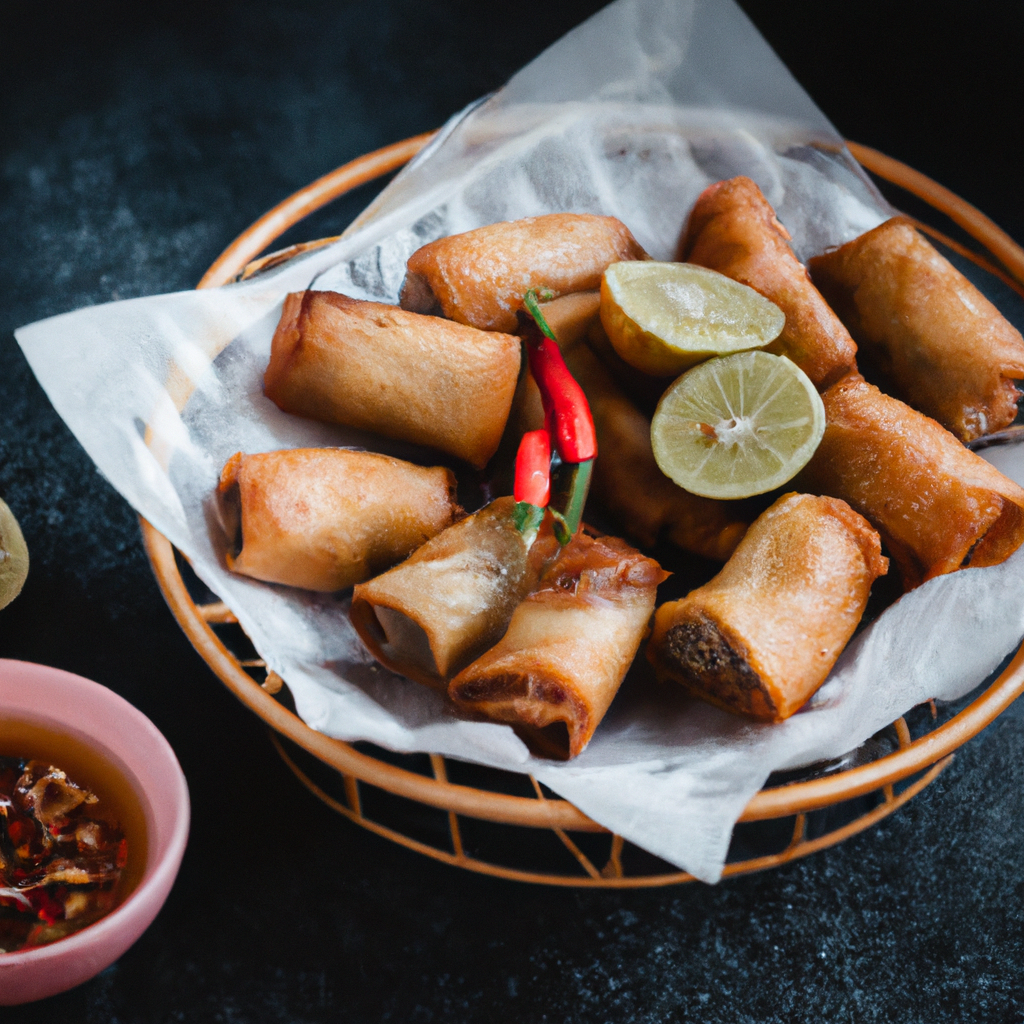
Chả Giò or Nem Rán?
Both names mean the same fried rolls. In southern Vietnam they are called Chả Giò, in Hanoi and the north Nem Rán. The filling changes from family to family: sometimes taro goes in, sometimes jicama or crab meat. Ground pork, glass noodles, wood ear mushrooms and a rice paper wrapper are common to most versions. With rice noodles and herbs it becomes Bún Nem.
How they differ from other spring rolls
Chinese spring rolls are wrapped in wheat dough sheets. They brown smooth and even. Rice paper blisters in the oil and turns shattery, and that crust is what makes Chả Giò. Gỏi Cuốn are also rolled in rice paper, but you eat them cold with cooked shrimp, herbs and rice noodles.
The right ingredients
- Rice paper: Use thin, round sheets 22 cm (9 in) across. At an Asian grocery store you can also find lattice rice paper (bánh tráng rế), which forms an airy lattice crust in the oil.
- Wood ear mushrooms: You buy them dried. 10 g is enough for the filling, and in warm water they swell to several times their size in 20 minutes. Cut off the hard stem ends.
- Taro: It makes the filling loose and mildly sweet. Wear gloves when grating it, because raw taro can irritate the skin. Sweet potato or jicama work as a substitute, and more ideas for swaps are under substituting Asian ingredients.
- Glass noodles: Soak mung bean glass noodles for 10 minutes and cut them with scissors to lengths of 2 to 3 cm (about 1 in).
Frying spring rolls: how to get them crisp
Moisten the rice paper briefly
Pull the sheet through warm water for 1 to 2 seconds. It still feels firm afterwards and turns soft on the board within half a minute. Rice paper that is too wet tears when rolled and spatters in the oil.
Roll tight and without air
Place about 2 tbsp of filling as a long sausage on the lower third. Fold the bottom edge over it, then the sides, and roll up tightly. Air in the roll expands in the hot oil and bursts the wrapper. Lay the finished rolls down with space between them, otherwise they stick together.
Hold the temperature
Heat the oil to 180 °C (350 °F) and fry no more than 4 to 5 rolls at a time. More rolls cool the oil, and the wrapper soaks up oil. Without a thermometer, hold the handle of a wooden spoon in the oil: if fine bubbles rise along the handle, the heat is right. After 4 to 5 minutes the rolls are golden brown and the pork inside is cooked. For an even crisper wrapper, fry twice: first 5 minutes at 160 °C (320 °F), then after a 10-minute break another 1 to 2 minutes at 180 °C (350 °F).
In an air fryer
Brush the rolls all over with oil and cook them at 200 °C (400 °F) for 12 to 15 minutes, turning them halfway through. They turn crisp, but stay paler and harder than fried rolls.
Common mistakes
- Rolls burst: Too much filling or air in the roll. Stick to 2 tbsp and roll tight.
- Rolls stick together in the pot: Add them to the oil one at a time and do not stir in the first minute.
- Wet filling: After soaking, squeeze the mushrooms and glass noodles out in a cloth before chopping them.
What goes with it: nước chấm and herbs
In Vietnam you wrap each roll in a lettuce leaf, add mint and cilantro, and dip it in nước chấm. For the dip, stir fish sauce, lime juice, sugar and warm water until the sugar dissolves, and add garlic and chili in fine slices at the end. Plain fish sauce would be too salty as a dip. As a main course, serve the rolls on rice noodles with grilled pork, as in Bún Thịt Nướng.