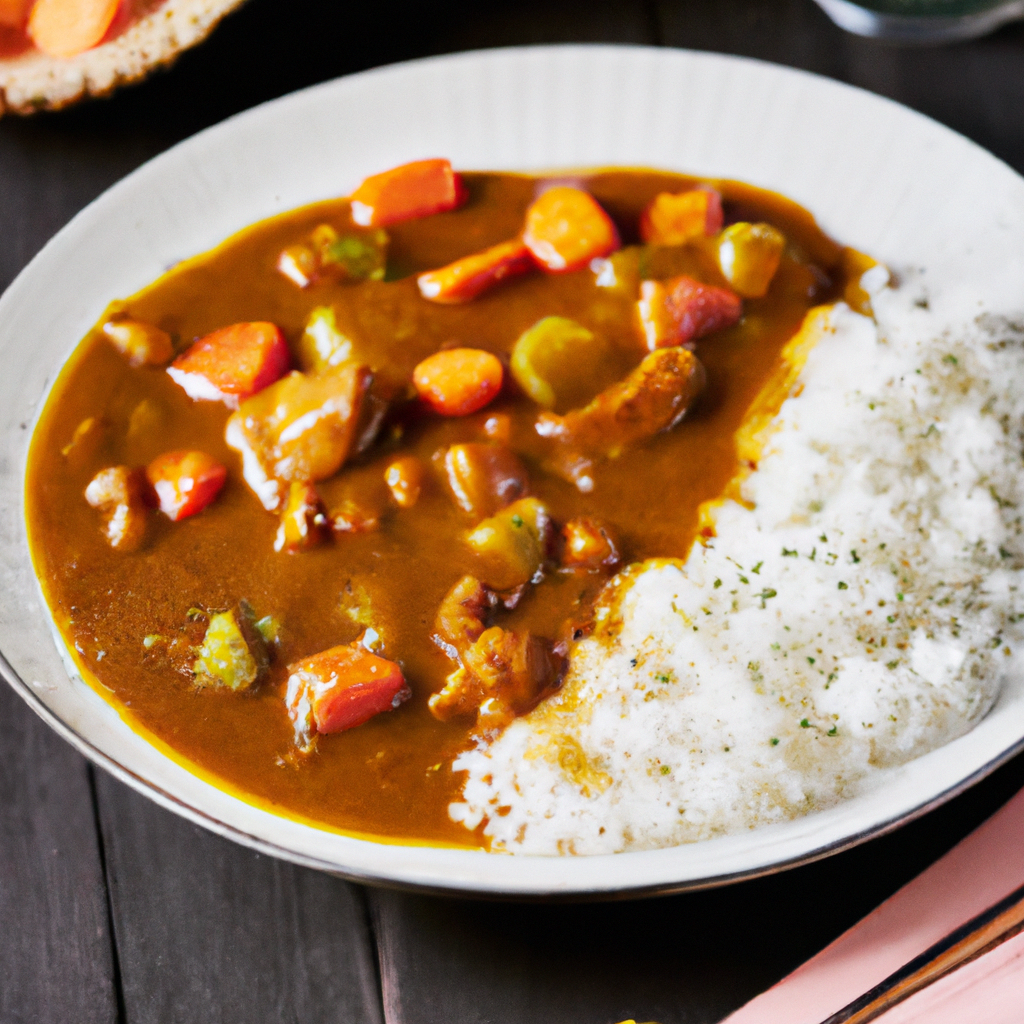
What is kare raisu?
Curry came to Japan in the late 19th century with British sailors and English curry powder. The Japanese navy put it on its menu, and to this day curry is served there on Fridays. Kare raisu is among the dishes that show up on tables in families, school cafeterias and fast-food chains in Japan. It has little in common with Indian curry: the Japanese sauce is mild, slightly sweet and so thick that it stays put on the rice.
Curry roux or curry powder?
Japanese families mostly cook curry with curry roux. These are blocks of fat, flour and spices that you add to the pot at the end. At an Asian grocery store you find them in the heat levels mild (amakuchi), medium (chukara) and hot (karakuchi). With roux you leave out the butter, flour and curry powder from the recipe card and stir in about 100 g of blocks for 1 liter of broth. Some brands contain animal fat or meat extract, so read the ingredient list for a vegetarian curry.
With the roux on the card, you control the heat and salt yourself. Japanese curry powder tastes milder than Indian madras curry. If you only have madras powder, use 2 tbsp instead of 3.
How to get the sauce thick and glossy
Toast the flour in the butter until it smells like biscuits and turns light brown. The curry powder goes in only for the last minute, since toasted longer it tastes bitter. Whisk the roux smooth with a ladle of hot broth before it goes in the pot, and no lumps form. The flour then needs 5 minutes of simmering to thicken. From that moment the thick sauce catches quickly on the bottom of the pot. Stir all the way to the bottom every 2 minutes.
Grated apple and honey give the typical sweetness. Japanese households also add a piece of dark chocolate, a spoonful of ketchup or a splash of Worcestershire sauce. Try one ingredient at a time and taste after each.
Variations
- With chicken or pork: Chicken thighs in pieces need 20 minutes of braising time. Cook pork shoulder for 40 minutes, like the beef.
- Katsu curry: You serve the sauce with a breaded cutlet. You can find the instructions at tonkatsu or chicken katsu.
- Curry udon: Thin leftovers with dashi and pour them over thick wheat noodles, see kare udon.
- Hayashi rice: The sister dish of curry braises beef and onions in a sauce of tomato and demi-glace. For the recipe, go to hayashi rice.
Common mistakes
- Too little thickening: Without roux or a flour roux, the sauce stays thin as soup.
- Potatoes too small: Cubes under 2 cm fall apart in 40 minutes. Cut them roughly, and their starch helps thicken the sauce as it cooks.
- Burnt powder: Curry powder over high heat turns bitter in seconds. Toast it over medium heat.
What to serve with it
Kare raisu goes with Japanese short-grain rice, which you prepare following the instructions under cooking rice. In Japan it comes with fukujinzuke, red vegetables pickled in soy sauce, or rakkyo, pickled shallots. On the second day the curry is thicker, because the potato starch keeps thickening it. Add a splash of water when reheating.