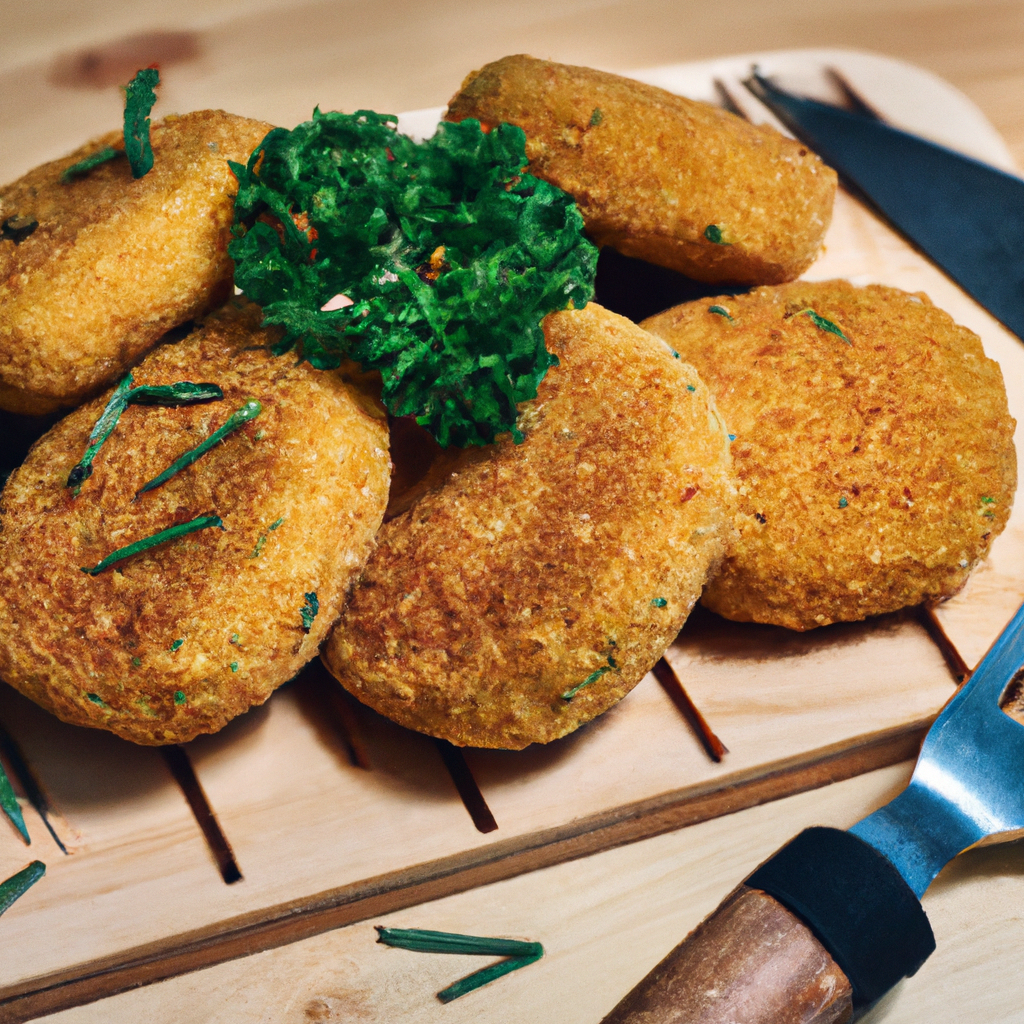
What is korokke?
The name comes from the French croquette. Croquettes came to Japan in the Meiji period between 1868 and 1912, when the country took up Western dishes. Today butchers and supermarkets in Japan sell korokke as a snack to go, and many families eat them in the evening with rice and miso soup. They differ from European croquettes in shape and coating: you form flat, oval patties and coat them with coarse panko.
The right ingredients
- Potatoes: Floury varieties give a dry, loose mash. Waxy ones turn sticky. After draining, let the potatoes steam dry for 2 minutes in the open pot.
- Ground meat: The card uses ground beef. In Japan, mixed ground beef and pork (aibiki) is common, which makes the croquettes juicier.
- Panko: The coarse Japanese breadcrumbs stay crisp longer than regular breadcrumbs. You can read more under panko.
- Seasoning: Many Japanese recipes add 1 tsp sugar to the ground meat. It rounds off the soy sauce and onion.
How to make korokke
Let the mixture cool
Warm mixture sticks to your hands, and the croquettes burst in the oil. Spread the mixture on a flat plate and let it cool for at least 20 minutes. Then, with wet hands, shape 12 oval patties about 2 cm thick.
Breading
Flour, egg, panko: in this order the coating holds. Tap off excess flour, or the egg layer comes loose. Press the panko on with the flat of your hand. For a thicker crust, pass the croquettes through egg and panko a second time.
Deep-frying
Heat the oil to 170 to 180 °C. Without a thermometer, dip in a wooden chopstick. If small bubbles rise right away, the oil is hot enough. The filling is already cooked, you only need a golden coating, and that takes 1 to 2 minutes per side. Fry no more than four at a time, or the temperature drops and the croquettes soak up oil.
Common mistakes
- Korokke burst: The mixture was too wet or too warm, or the coating had a gap. Chill the mixture and bread without gaps.
- Greasy and soft: The oil was too cold. Let it come back up to temperature between batches.
- Gluey mixture: In a blender, potato turns gluey. Use a masher and leave small pieces in.
Variations
For a vegetarian version, replace the ground meat with 200 g finely chopped button mushrooms or shiitake, which you fry until no liquid is left in the pan. For kabocha korokke, use kabocha squash instead of potatoes. Kurimu korokke have a filling of thick béchamel with crab or corn. If you shape ground meat into patties without potato, the dish is called menchi katsu.
What to serve with it
In Japan, korokke sit on finely shredded white cabbage with a thick, fruity sauce poured over them. You stir it together yourself from ketchup, Worcestershire sauce and soy sauce, and you find amounts and background under tonkatsu sauce. With rice and miso soup it becomes a dinner. Korokke also go well on Japanese curry, so try them with curry rice. You find more crisp breaded food in the recipe for tonkatsu.