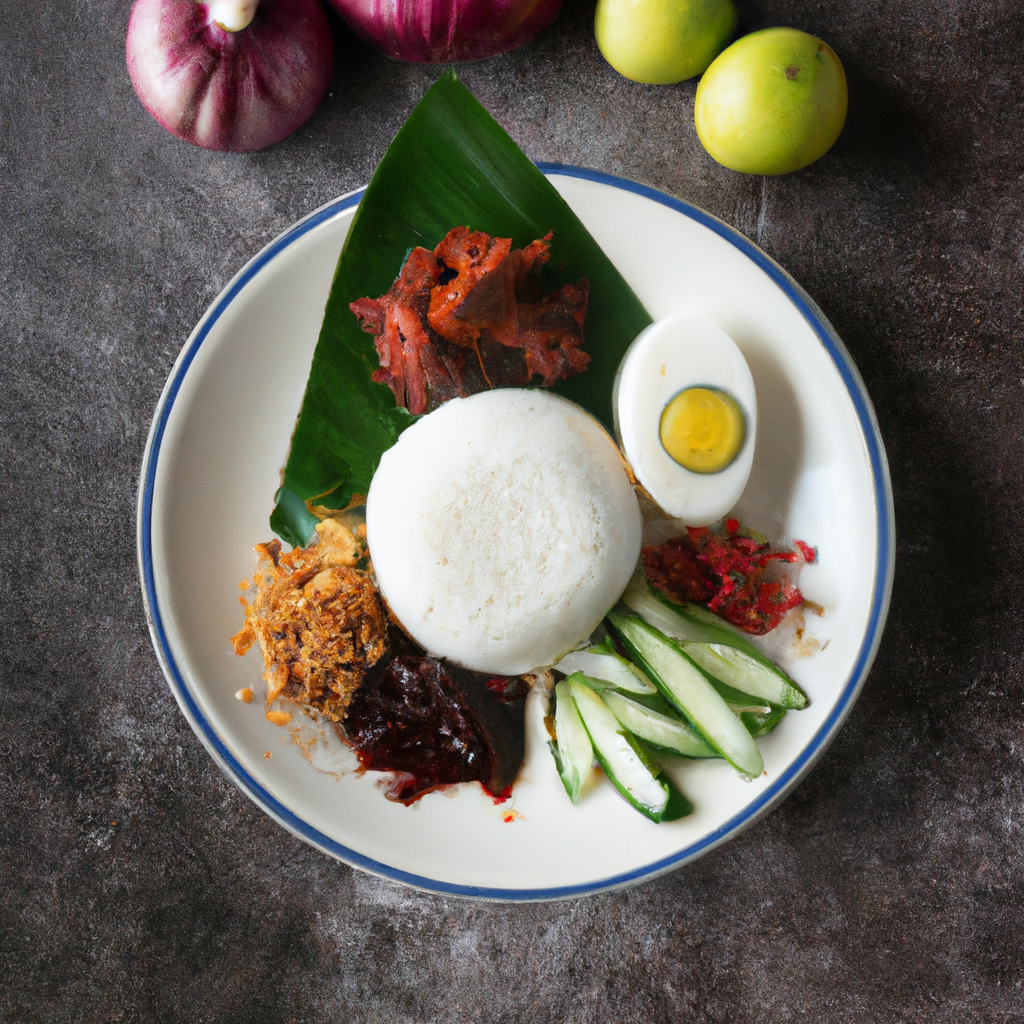
What is nasi lemak?
Nasi means rice. Lemak means fatty or creamy in Malay and refers to the coconut milk you cook the rice in. Many Malaysians call nasi lemak their national dish, and in Singapore and Brunei it is part of everyday life too. In the morning, stalls sell small portions wrapped in banana leaf and paper. At lunch and dinner the rice comes to the table with larger sides.
The right ingredients
- Rice: Wash jasmine rice until the water stays clear. The recipe card counts 600 ml of liquid for 400 g of rice. Add 1 tsp salt, because without salt the coconut rice tastes flat. You can find the basics of cooking it under cooking jasmine rice.
- Coconut milk: Use full-fat canned coconut milk. With reduced-fat coconut milk the rice stays pale.
- Pandan: Frozen pandan leaves are sold at Asian grocery stores. Tie the leaf into a knot, so it releases more aroma and is easy to fish out again.
- Ikan bilis: That is the Malaysian name for dried anchovies. At an Asian grocery store you will find them as dried anchovies. Pull off the head and the dark gut, which takes away the bitter aftertaste. Rinse them briefly and pat them dry.
- Tamarind: It gives the sambal its sourness. You can tell jarred paste from block tamarind pulp under tamarind.
Sambal for nasi lemak
Sambal for nasi lemak tastes sweeter and milder than sambal oelek from the jar. Malaysian cooks usually take dried chilies, which they soak and puree. The recipe card uses 200 g fresh chilies. If you deseed half of them, the heat stays manageable. Classically, 1 tsp shrimp paste (belacan) also goes into the paste.
Fry the chili paste over medium heat for 15 to 20 minutes. It is done when the oil separates and shines red, which is called pecah minyak in Malaysia. Only then do you add the tamarind, sugar and salt. Sambal that is fried too briefly tastes raw and of onion.
How to make the coconut rice
Bring the coconut milk, water, salt, lemongrass, ginger and pandan to a boil, add the rice and stir once. Put the lid on, turn the stove to its lowest setting and let the rice cook for 15 minutes. Then let it rest for 10 minutes with the lid closed. Coconut milk scorches on the bottom faster than water, so use a pot with a thick base. In a rice cooker, put all the ingredients in the pot and start the normal program.
Common mistakes
- Anchovies toasted too early: After an hour they absorb moisture and turn soft. Toast them just before serving.
- Peanuts too dark: Take them out of the pan as soon as they are golden brown. They keep cooking on the plate and taste bitter otherwise.
- Egg cooked too long: After 9 minutes the yolk is firm, and after 12 minutes it gets a gray rim.
Sides and variations
The basic form consists of coconut rice, sambal, ikan bilis, peanuts, egg and cucumber. For a bigger meal, add Ayam Goreng Berempah, spiced fried chicken, or rendang. Instead of a hard-boiled egg, a fried egg with a crispy edge works. For breakfast, Malaysians drink Teh Tarik with it, a frothy pulled milk tea.