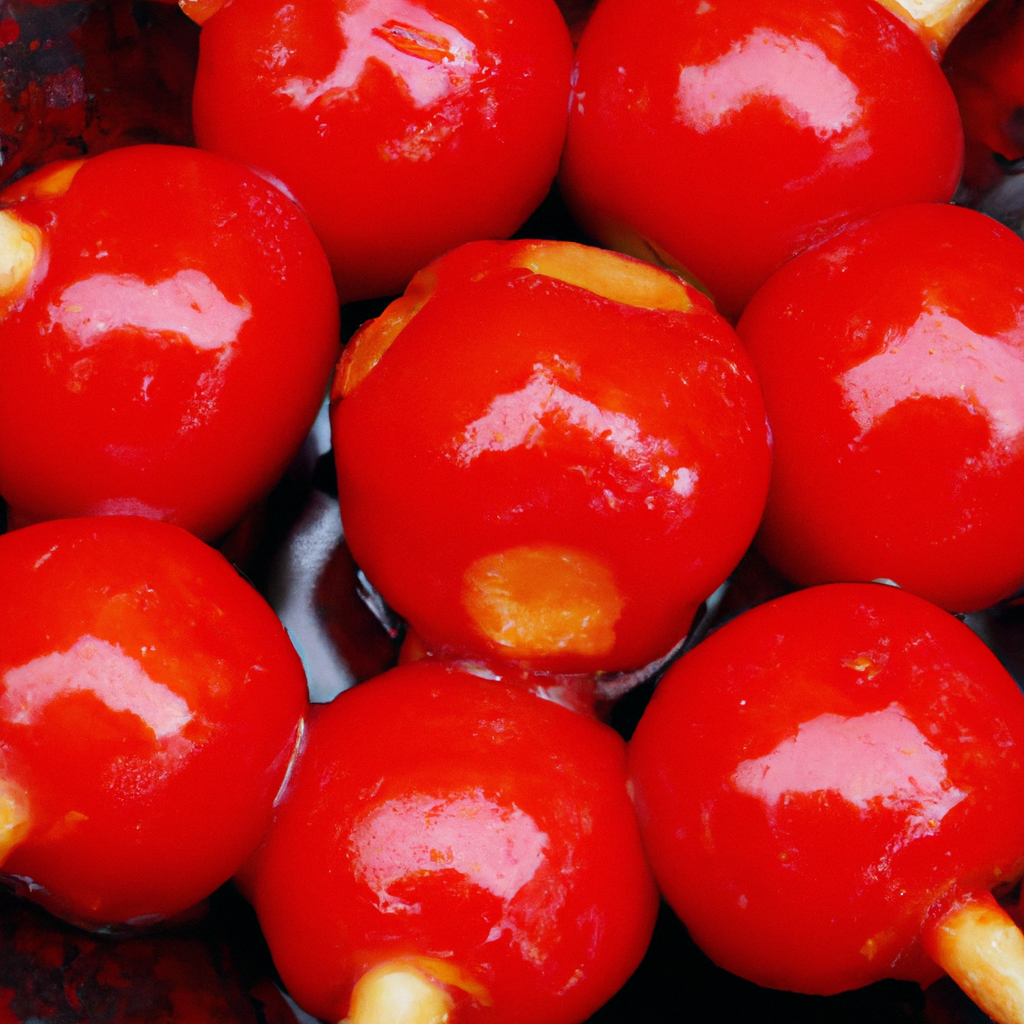
What is tanghulu?
Tanghulu comes from northern China and is a typical winter snack in Beijing. The name roughly means sugar gourd, because the fruit lined up on the stick looks like a bottle gourd. Traditionally, vendors skewer hawthorn berries (shanzha). They taste sour and balance the sweet glaze. In recent years, snack stalls in Korea and Europe have started selling tanghulu with strawberries, grapes and mandarins.
Candied versus glazed fruit
In German, "candied" usually means fruit that sits for several days in ever stronger sugar syrup until sugar replaces the water in the fruit. That is how candied citron peel and glacé cherries are made. Tanghulu belongs to the glazed fruits: the fruit stays raw and only the shell is sugar. Plan a little under an hour for drying the fruit, and eat the skewers fresh, when they taste best.
Choosing the right fruit
- Works well: strawberries, seedless grapes, mandarin segments and thick kiwi slices. Firm fruit with smooth, dry skin holds the glaze.
- Cherries and plums: Skewer them whole. Cut fruit leaks juice and the glaze slides off. Tell your guests the pits are still inside.
- Less suitable: watermelon, pineapple and other juicy pieces with an open cut surface. The juice dissolves the sugar from the inside and the shell turns sticky within minutes.
How to get the sugar glaze right
Dry the fruit
Wash the fruit and let it dry on a kitchen towel for 30 minutes. A single drop of water makes hot syrup spatter and clouds the glaze at that spot. Fruit straight from the fridge fogs up, so take it out in good time.
Syrup at 150 degrees
Boil sugar and water in a ratio of 2 : 1 and stop stirring once the sugar has dissolved. If you keep stirring, crystals form and the syrup turns grainy. The teaspoon of vinegar on the recipe card slows that crystallization. With a candy thermometer, wait for 150 to 155 °C (302 to 311 °F). Without one, dip a wooden stick into the syrup and then into ice water. If the sugar thread breaks glassy and does not stick to your teeth, the syrup is ready. Depending on your pot, this takes 10 to 15 minutes. The syrup is pale yellow by then.
Dipping
Tilt the pot slightly so the syrup pools on one side. Turn each skewer through the syrup once and lift it out right away; a thin layer is enough. Lay the skewers on baking paper. After 1 to 2 minutes the shell is hard, and a few seconds after a dip in ice water.
Common mistakes
- Glaze sticks to your teeth: The syrup was too cool. Keep boiling it and repeat the test.
- Bitter taste: Above 170 °C (338 °F) the sugar caramelizes and turns brown. For tanghulu it should stay pale.
- Soft shell after an hour: Sugar draws moisture from the air and from the fruit. Eat the skewers fresh and do not put them in the fridge.
Syrup at 150 °C (302 °F) sticks to skin and causes severe burns. Do the dipping yourself if kids are helping, and keep a bowl of cold water next to the stove.
More sweet snacks
The same sugar technique gives you Ba Si Xiang Jiao, fried bananas with caramel threads, or Hua Sheng Tang, Chinese peanut brittle. Sugar and baking soda make Korean Dalgona. Strawberries in soft rice dough are Ichigo Daifuku.