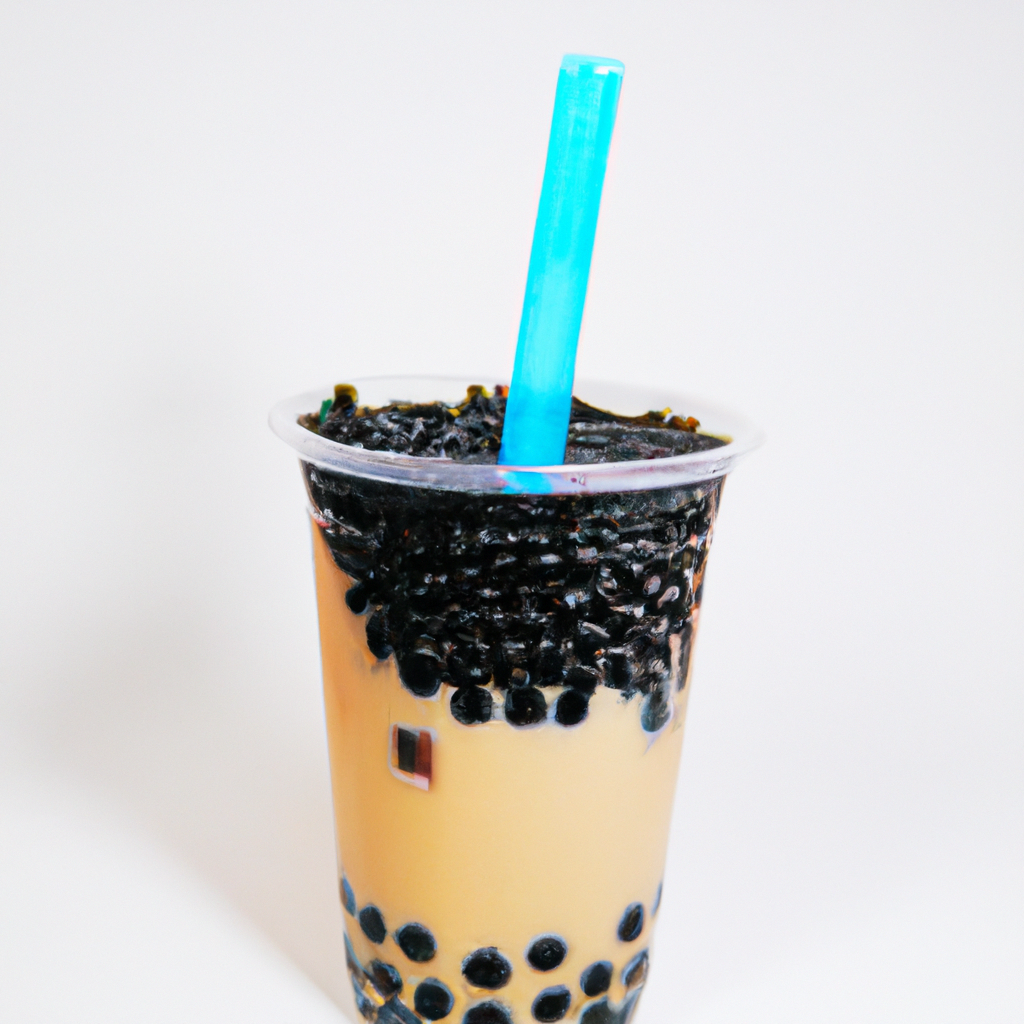
What is bubble tea?
In Taiwan the drink is called 珍珠奶茶, Zhēnzhū Nǎichá, literally pearl milk tea. It comes from Taiwanese tea houses of the 1980s and spread from there across Asia to Europe. The "bubble" in the name refers to the foam from shaking the drink with ice, or to the pearls at the bottom. In English many people simply say "boba."
The basic form has three parts: strong black tea, milk, and tapioca pearls in sugar syrup. The pearls themselves taste of little. They get their sweetness from the syrup, and their bite is soft and springy. In Taiwan this texture is called "Q."
The right ingredients
- Tea: Assam or a strong Ceylon holds up against milk and ice. Brew it twice as strong as for normal drinking, or the glass tastes watery after a few minutes. For the fruit version, use jasmine tea or green tea.
- Tapioca pearls: At an Asian grocery store you can find dried black pearls in two types. Classic pearls cook for 20 to 30 minutes, quick-cook pearls for about 5 minutes. Follow the package.
- Milk: Whole milk makes the tea round. Oat drink works well, and soy drink brings a slight bean note. Many shops use milk powder or coffee creamer, but at home regular milk is enough.
- Sugar: Dark muscovado or brown cane sugar gives the syrup caramel notes. Honey works too, but its flavor stands out clearly.
- Straw: Without a bubble tea straw about 12 mm in diameter, the pearls stay in the glass. You can find reusable stainless steel or glass straws in housewares stores.
What else belongs in an Asian pantry is in the Asian pantry list.
Making and cooking tapioca pearls
Pearls from tapioca starch
For two servings you need 100 g tapioca starch, 40 g dark brown sugar, and 80 ml water. Bring the water and sugar to a boil in a small pot until the sugar has dissolved. Over low heat, stir in half of the starch until a sticky, glossy mass forms. Take the pot off the heat and knead in the rest of the starch as soon as you can touch the dough. The water has to be boiling for this: with lukewarm water the starch does not gelatinize, and the dough crumbles.
Roll the dough into strands as thick as a pencil and cut off pieces about 1 cm long. Roll each piece between your palms into a ball and toss the pearls in a little starch so they do not stick together. You can freeze uncooked pearls spread out flat and add them to boiling water frozen later.
Cooking pearls properly
Use plenty of water, about ten times the amount of pearls, and add them only to rapidly boiling water. Stir during the first minute, until all the pearls float to the top. Homemade pearls need 15 to 20 minutes, and store-bought ones as long as the package says. Then let them steep covered in the hot water for 10 minutes.
The pearls are done when they look translucent and no white core is left inside. Cut one open to check. If you like them firmer, take them out earlier, and for soft pearls extend the cooking time by a few minutes. Rinse them briefly in cold water so they do not stick, and put them into the syrup right away.
For the syrup, boil 50 g dark brown sugar with 50 ml water for 3 to 4 minutes, until it thickens slightly. The pearls steep in it lukewarm for 10 minutes. Cooked pearls turn hard in the refrigerator, so cook only as many as you will drink in the next few hours.
Variations: brown sugar, fruit tea, and more
Brown sugar milk
This variation needs no tea. Put the cooked pearls in the thick sugar syrup and simmer both until the syrup clings to the pearls. Pour the pearls and warm syrup into the glass, tilt the glass so the syrup runs down the walls, and pour ice and cold whole milk over it. Because of the stripes on the glass, this version is also called "tiger milk."
Fruit tea
Brew jasmine tea or green tea at about 80°C (176°F) for 3 minutes and let it cool. Shake it with ice, 2 tbsp fruit puree made from mango, passion fruit, or strawberry, and sugar syrup to taste. Leave out the milk. Instead of tapioca pearls, popping boba works here, small spheres with a juice filling that burst when you bite them. You buy those ready-made.
More ideas
With matcha instead of black tea it becomes a green milk tea, and you can find the base in the Matcha Latte. Thai milk tea like Cha Nom Yen or Cha Yen with condensed milk takes pearls just as well. Grass jelly in small cubes also works as a topping.
How many calories does bubble tea have?
There is no fixed number, because cup size, sugar, and milk vary widely. Most of the calories sit in the sugar and the pearls: tapioca pearls are almost pure starch, and the syrup they sit in adds more. A large cup from a shop with full sweetness and whole milk is closer to a small meal than a drink.
At home you control this yourself. The nutrition values on the recipe card are a rough estimate for one glass. A level tablespoon of sugar weighs about 12 g and brings around 50 kcal. Half the sugar, low-fat milk or unsweetened oat drink, and fewer pearls save the most.
Common mistakes
- Pearls added to cold water: The surface dissolves, and the pearls stick to the bottom of the pot. The water has to be boiling rapidly.
- Too little cooking water: The starch thickens the water, and the pearls cook unevenly.
- Pearls cooked in advance: After a few hours or in the refrigerator they turn hard and chalky.
- Tea too weak: Ice and milk dilute it. Use double the amount of tea, but do not steep black tea longer than 5 minutes, or it turns bitter.
- Hot tea over ice: The ice melts away immediately. Let the tea cool first.