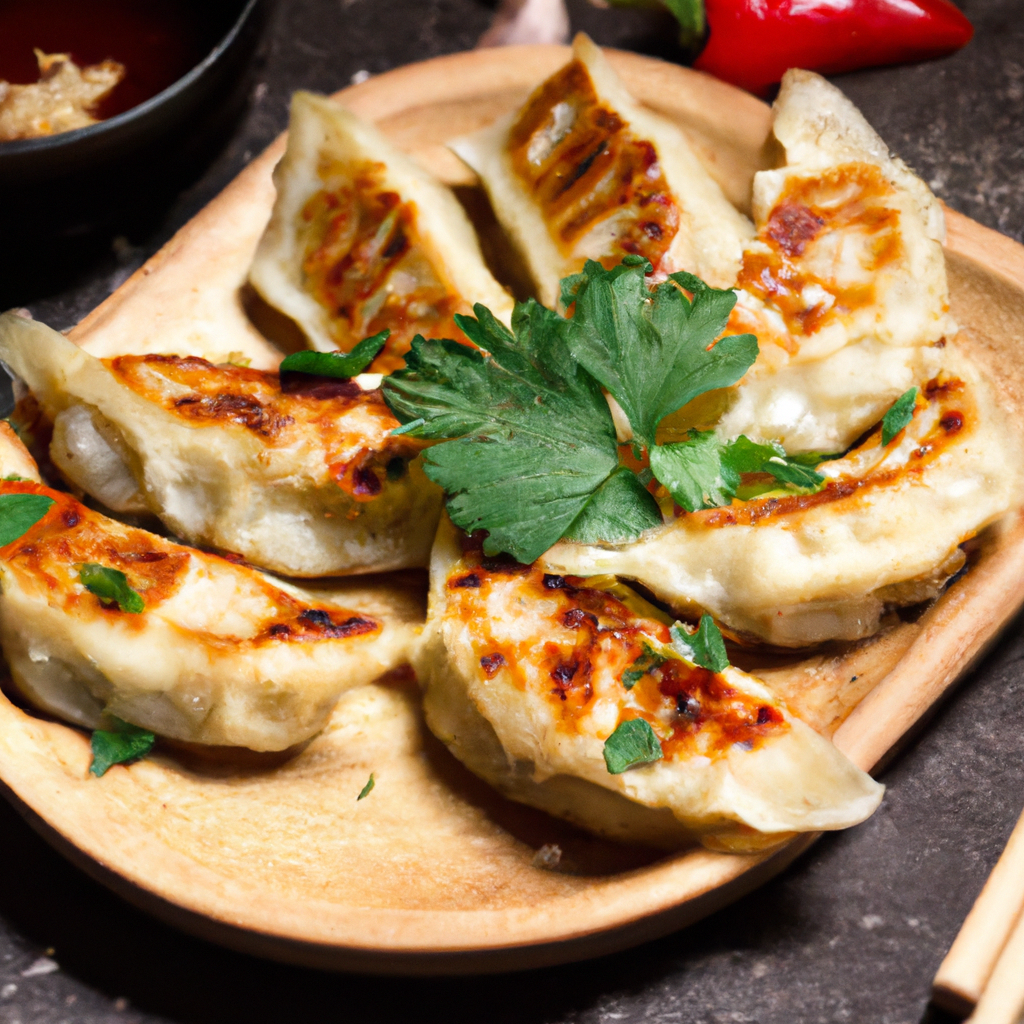
What are gyoza?
Gyoza go back to the Chinese jiaozi. In Japan, people mostly eat them as yaki-gyoza, meaning fried and steamed in one go. The wrapper is thinner than on many Chinese dumplings, and the filling is finely chopped and seasoned strongly with garlic. You get gyoza as a side at a ramen restaurant, with beer at an izakaya and frozen at a Japanese supermarket.
The right ingredients
- Gyoza wrappers: Round dough sheets about 8 cm across are sold in the refrigerated or frozen section of an Asian grocery store. Thaw frozen wrappers in the fridge. While you fill, cover the stack with a damp cloth, or the edges dry out and stop sticking.
- Ground meat: Ground pork with some fat stays juicy. Lean ground meat turns dry and crumbly in the pan.
- Cabbage: White cabbage or napa cabbage, chopped very fine. You salt it first and squeeze it out.
- Seasoning: Japanese soy sauce and toasted sesame oil. Which soy sauce suits what is explained under light and dark soy sauce.
How to get gyoza right: the key steps
Draw the water out of the cabbage
Mix the chopped cabbage with the salt and let it stand for 10 minutes. Then squeeze it out hard in a kitchen towel. Without this step, the cabbage releases water as it cooks, the filling turns mushy and the dough goes soggy.
Stir the filling vigorously
Stir the ground pork with soy sauce, sesame oil, sugar and pepper for about a minute, until the mixture turns sticky. Only then add the cabbage, scallions, garlic and ginger. The bound filling stays compact and juicy when frying.
Folding
A heaping teaspoon of filling per wrapper is enough. Moisten half the edge, fold the wrapper over and make five or six small pleats on the front side, pressing them against the smooth back. If folding does not work yet, press the edges together into a smooth half-moon. It makes no difference to the taste.
Frying and steaming
Set the gyoza flat side down in the hot oil, close together. After about 2 minutes, the bottoms are light brown. Now pour in the water and put the lid on right away. When the water has boiled off, take off the lid and keep frying until the bottoms are crispy. A 28 cm pan holds about 15 pieces, so you fry in two rounds.
Common mistakes
- Too much filling: The edges do not seal, and the gyoza burst while steaming.
- Stainless steel pan: The bottoms stick to it. Use a nonstick pan or a well-seasoned cast iron pan.
- Lid not within reach: The water spatters in the hot oil. Hold the lid in your hand before you pour in the water.
- Flipped them: You fry gyoza on one side only. To serve, put a plate over the pan and flip it, so the crispy side is on top.
Variations
For a vegetarian filling, replace the ground meat with crumbled firm tofu and finely chopped shiitake. How to prepare the mushrooms is explained under Preparing shiitake. For shrimp gyoza, swap half the ground meat for roughly chopped raw shrimp. Boiled gyoza (sui-gyoza) go into simmering water or broth and cook for 2 more minutes after they rise to the surface.
What goes with them
For the classic dip, mix soy sauce and rice vinegar in equal parts and add a few drops of chili oil. Instead of vinegar, you can use ponzu. For a meal, serve gyoza with chahan or alongside a bowl of ramen. If you like these gyoza, also try the Korean gunmandu.