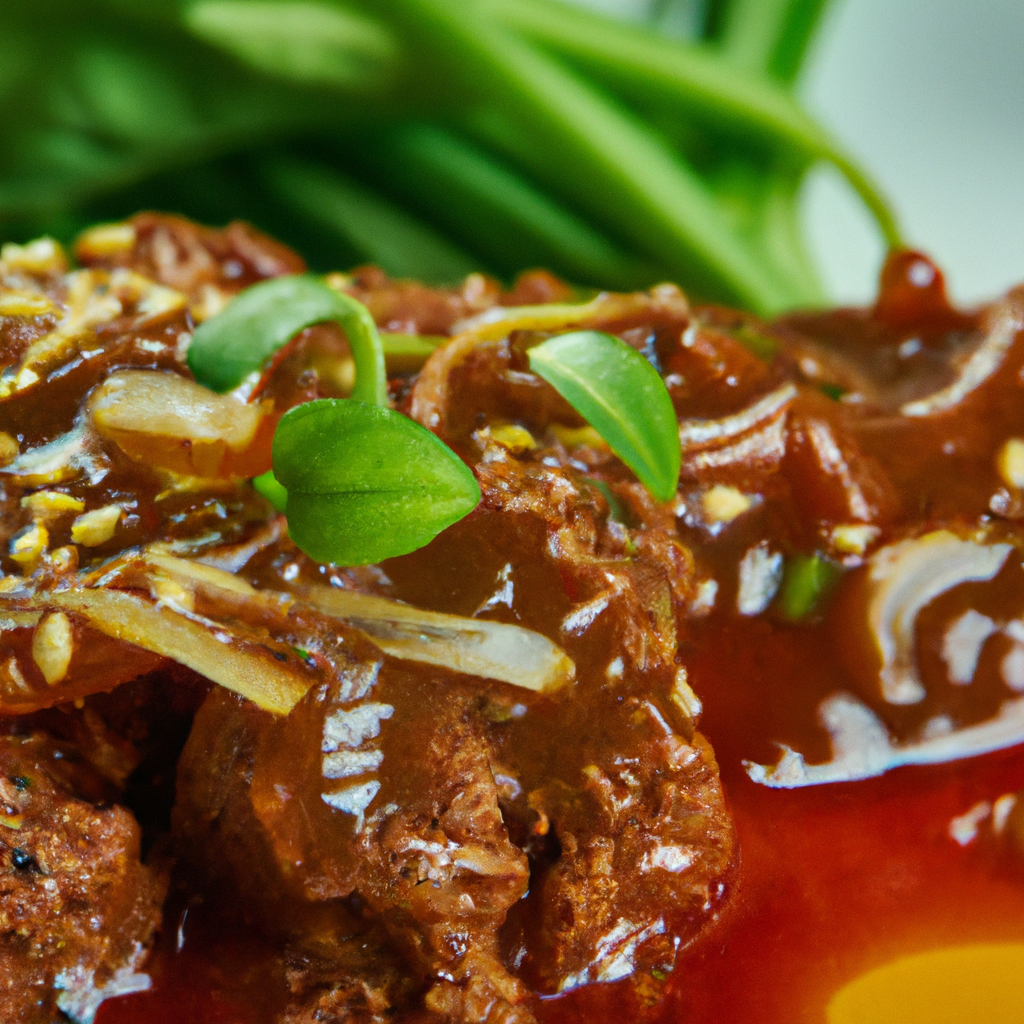
What is mirin?
Mirin is a sweet Japanese rice wine for cooking. Producers make it from glutinous rice, rice koji and shochu, a Japanese spirit, and let the mixture mature for several weeks. The koji breaks the starch in the rice down into sugar. Real mirin is labeled hon-mirin on the bottle, has around 14% alcohol and tastes sweet with a light spiciness. In supermarkets you more often find mirin-style seasoning with under 1% alcohol, often based on glucose syrup. Both work for this sauce. Hon-mirin tastes rounder. Types and buying are explained on the page mirin.
Mirin sauce: the job of each ingredient
- Soy sauce brings salt and umami. Use Japanese soy sauce. Chinese dark soy sauce turns the braise almost black, and you can read more under light and dark soy sauce.
- Mirin gives sweetness and shine. While braising, the sugar settles as a thin film around meat and potatoes.
- Sake softens the smell of meat and fish and rounds off the umami. Most of the alcohol evaporates while simmering.
- Ginger and scallion add freshness. For a stock, leave them out and add them fresh to the dish.
Replacing mirin
Without mirin, mix 3 tbsp sake with 1 tbsp sugar and use the mixture in the same amount. Without alcohol, water with sugar in the same ratio will do. Rice vinegar does not work as a substitute, because it makes the sauce sour. You get sake at an Asian grocery store, and a dry white wine is the fallback.
How to season braised dishes with the sauce
The sauce is concentrated. For braising, dilute it with dashi or water, as a rule of thumb 1 part sauce to 3 parts liquid. For nikujaga for 4 people, that is about 120 ml sauce and 360 ml dashi. You braise beef, potatoes, onions and carrots in it under a lid that sits directly on the food. In Japan this lid is called otoshibuta. A circle of parchment paper with a hole in the middle serves the same purpose: the small amount of liquid rises along it and moistens the top.
Season only after braising. The liquid reduces while cooking, and the dish gets saltier. So start with less sauce and add more at the end if it lacks seasoning.
More dishes with the sauce
- Gyudon: You braise thinly sliced beef and onions in diluted sauce and serve both over rice, see gyudon.
- Nimono: Cook pumpkin, carrots, radish or shiitake in sauce and dashi until a wooden skewer slides in without resistance.
- Pork belly: For buta no kakuni, use more sugar and ginger and braise the meat for 2 to 3 hours.
- Glaze: Reduced undiluted, the sauce glazes chicken or salmon. For a thicker teriyaki sauce, increase the sugar.
Storage
Fill the cooled sauce into a clean screw-top jar. In the fridge it keeps for up to two weeks. Shake the jar before use, because the grated ginger settles at the bottom.