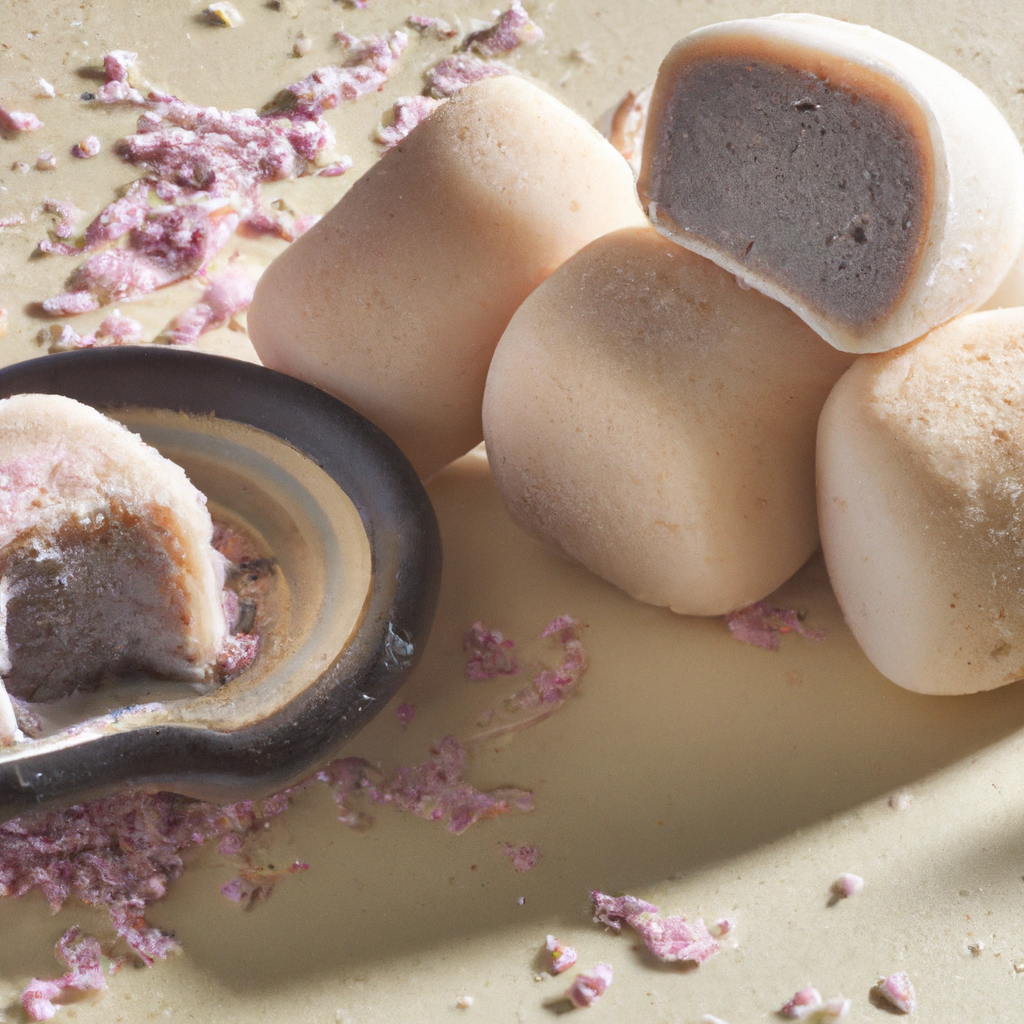
What is Yù Tóu Nián Gāo?
Nián Gāo (年糕) means year cake. In Chinese, the word sounds like "higher every year", so families eat the cake at New Year and wish for growth and success. Yù Tóu (芋頭) is taro, and Shǒu Gōng means handmade.
The savory taro cake from Cantonese dim sum is a different dish. You make it with regular rice flour and season it with sausage and dried shrimp. The recipe is under Yutou Gao. Its relative made with daikon is Luo Bo Gao.
The right ingredients
- Taro: At an Asian grocery store, you find large tubers with a brown, fibrous skin and white flesh with purple dots. They turn floury when steamed and mash easily. Small tubers (eddo) are slimier.
- Glutinous rice flour: Look for the label "glutinous rice flour". From the Thai brand with the elephant on the package, glutinous rice flour comes in the green bag and regular rice flour in the red one. With regular rice flour, the cake crumbles. You can read more about glutinous rice and its starch under Cooking glutinous rice.
- Sugar: White sugar keeps the light, purple-speckled color. With brown sugar or palm sugar, the cake gets darker and tastes of caramel.
How to get the cake right
Peel and steam the taro
Raw taro contains oxalate crystals that itch on the skin. Wear gloves when you peel it. Steam the cubes for 20 minutes, until a knife slides in without resistance, and mash them while hot. Half-cooked taro scratches the throat.
Mix the batter
Add the water by the tablespoon. Each tuber brings a different amount of moisture, and sometimes you only need 100 ml. The batter should fall from the spoon thick and glossy, like stiff mashed potatoes.
Steam
Cover the pan with foil or a plate so no condensation drips onto the batter. After 60 minutes, stick a wooden skewer into the center. If no white, raw batter clings to it, the cake is done. Let it cool completely before you cut it, or it sticks to the knife.
Common mistakes
- Batter too runny: The cake stays soft in the middle and cannot be cut into slices.
- Taro mashed coarsely: Small pieces do not matter, but large chunks tear out when you cut.
- Steamer boiled dry: Check the water level after 30 minutes and top it up with boiling water.
Serving and storing
Once cool, cut the cake into slices 1 cm thick and eat it with tea. In the fridge, it firms up after a day. Then fry the slices in a little oil for 2 to 3 minutes per side, until crispy outside and soft again inside. In southern China and Hong Kong, many cooks dip the slices in beaten egg first. Covered, the cake keeps for 4 to 5 days in the fridge.
Variations
For a stronger coconut flavor, replace the water with coconut milk. With banana you get the glutinous rice cake with banana, with Chinese yam the Shan Yao Nian Gao. Taro and coconut also come together in the Vietnamese dessert Chè Khoai Môn, which you spoon warm from the bowl.