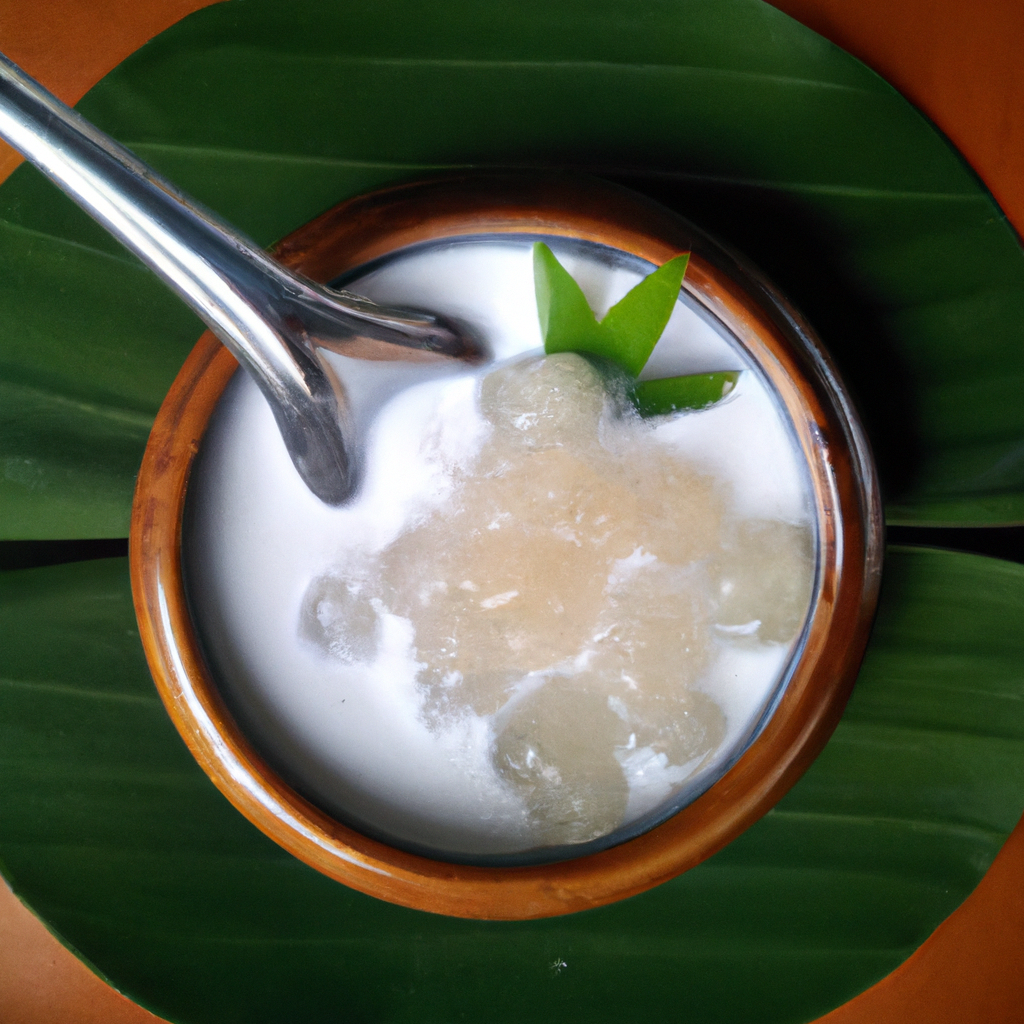
What is sago?
Sago is starch in pearl form. The name comes from the sago palm, whose pith people in Southeast Asia use to make the original starch. The pearl sago in German supermarkets is mostly made from potato starch, while at an Asian grocery store you find pearls made from tapioca, the starch of the cassava root. Both kinds work for Num Sakoo and contain no gluten. Buy small white pearls 2 to 3 mm across. The large dark pearls from bubble tea need 30 minutes or longer and stay chewy.
Cooking sago pearls properly
For 150 g of pearls, use 1 l of water. Add the pearls only once the water is at a rolling boil, and stir without a break for the first 3 minutes. In lukewarm water, the starch swells on the outside before the pearls move, and they stick together in a lump.
After 10 to 15 minutes the pearls are translucent with at most a tiny white core. If the core is still visible, turn off the heat and let them steep covered for 5 to 10 minutes. Cooking time depends on size and type, so check the package. Then rinse the pearls cold in a sieve. The water takes the loose starch with it, and the pearls stay separate.
Coconut milk and sweetness
- Coconut milk: Use unsweetened canned coconut milk. Coconut drinks from the refrigerated aisle are too thin and make the dessert watery.
- Sugar: White sugar keeps the color light. Palm sugar gives a caramel note and turns the coconut milk beige.
- Salt: The pinch of salt belongs in it. It lifts the sweetness and coconut aroma without tasting salty.
- Pandan: A knotted pandan leaf steeped in the warm coconut milk gives a green, nutty fragrance.
Warm the coconut milk only until the sugar dissolves. If it boils hard, the fat separates and floats on top as an oily film.
Common mistakes
- Starting in cold water: The pearls stick together in a block.
- Taking it off the heat too early: A large white core tastes floury and crunches.
- Mixing it the day before: Sago keeps absorbing liquid and gets firm. Stir in 50 to 100 ml of coconut milk or water before serving. In the fridge the dessert keeps for 2 days.
Variations with sago
For a more filling version, simmer 200 g diced pumpkin, sweet potato or taro in the coconut milk before adding the pearls. You can find a taro version from Vietnam in the recipe for Che Ba Ba. In summer, serve Num Sakoo chilled with diced mango or jackfruit.
You may know molded sago pudding from Malaysia: for Sago Gula Melaka, you let the cooked pearls set in small molds and pour palm sugar syrup and coconut milk over them. More coconut desserts from Southeast Asia are Num Lot with green pandan jelly and the Thai Ruam Mit with tapioca and fruit.
Serving
Spoon the dessert into small bowls and scatter roasted, roughly chopped peanuts over it. Toasted sesame seeds or shredded coconut also add crunch. Served warm, Num Sakoo is creamier, and chilled it is thicker and more refreshing. A few mint leaves add a green accent.