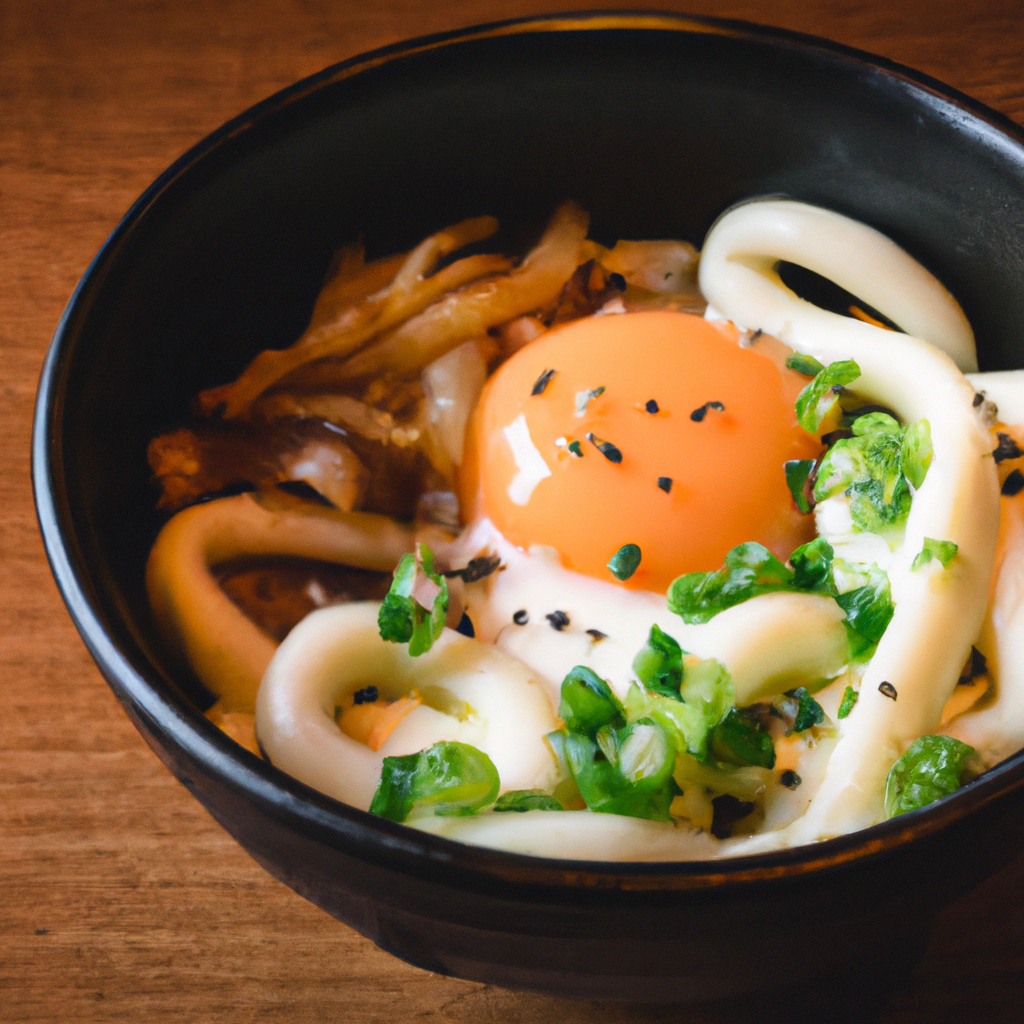
What is nabeyaki udon?
Nabe means pot, yaki means cooked or fried. The pot in question is a small clay or aluminum pot for one person, in which broth, noodles and toppings cook together. Restaurants in Japan serve the dish in winter. The classic toppings are shrimp tempura, kamaboko (fish cake), shiitake, leek and egg. This recipe uses chicken and carrots and needs no deep fryer.
Udon or ramen?
Udon and ramen are both wheat noodles. You knead udon from flour, water and salt, and they are thick, white and soft. Ramen noodles get kansui, an alkaline water that makes them yellow and springy. Udon belong in nabeyaki udon because they soak up the broth and stay soft in the pot. You can use ramen noodles, but over the long cooking time in the pot they lose their bite. You can read more about types and buying them under udon noodles.
The right ingredients
- Udon: Precooked udon come in 200 g packs in the refrigerated section or frozen. One pack is enough for one portion. Dried udon (100 g per person) you boil in water first and rinse. For homemade noodles there is a separate recipe: Homemade Udon Noodles.
- Broth: Chicken broth makes the soup hearty. It tastes more Japanese with dashi. Replace half of the broth with dashi, or cook with 1 liter of dashi. For how to make it and the matching powder, see Dashi and Dashi Powder.
- Chicken: Skinless chicken thighs stay juicier than breast when simmered. If you use breast, cut it into thin strips and let it cook gently over low heat.
- Extras from an Asian grocery store: Kamaboko, naruto slices or fried tofu (aburaage) fit in the pot. A handful of spinach adds color.
How to make nabeyaki udon
In small pots
If you have small lidded pots or a donabe, divide the seasoned broth with the vegetables and chicken among the pots. Add the noodles, bring each pot to a boil and press a hollow into the middle for the egg. With the lid on, cook each portion for 3 to 4 minutes over low heat. Then set the pot on a wooden board and serve in it.
The egg
Crack the egg into a small bowl first and slide it from there onto the soup, so the yolk stays intact. After 3 minutes under the lid the white is set and the yolk is runny. For a firm yolk, leave the lid on for 6 minutes. If you pour hot broth over a raw egg in the bowl, the white stays glassy.
Common mistakes
- Cooking dried udon in the broth: The starch makes the soup cloudy and thick. Boil them in water beforehand.
- Boiling the broth hard: After adding the egg, keep the heat low, otherwise the white shreds.
- Adding nori too early: Put the strips on only when serving. In the broth, nori goes soft within seconds.
Variations
For the restaurant version, put an Ebi Tempura on each portion just before serving so the batter stays crisp. With tempura in a shallow bowl and no egg, the dish is called Tempura Udon. With sweet simmered aburaage it becomes Kitsune Udon. For a vegetarian nabeyaki udon, cook it with dashi made from kombu and shiitake and replace the chicken with firm tofu.